Why Calibrate?
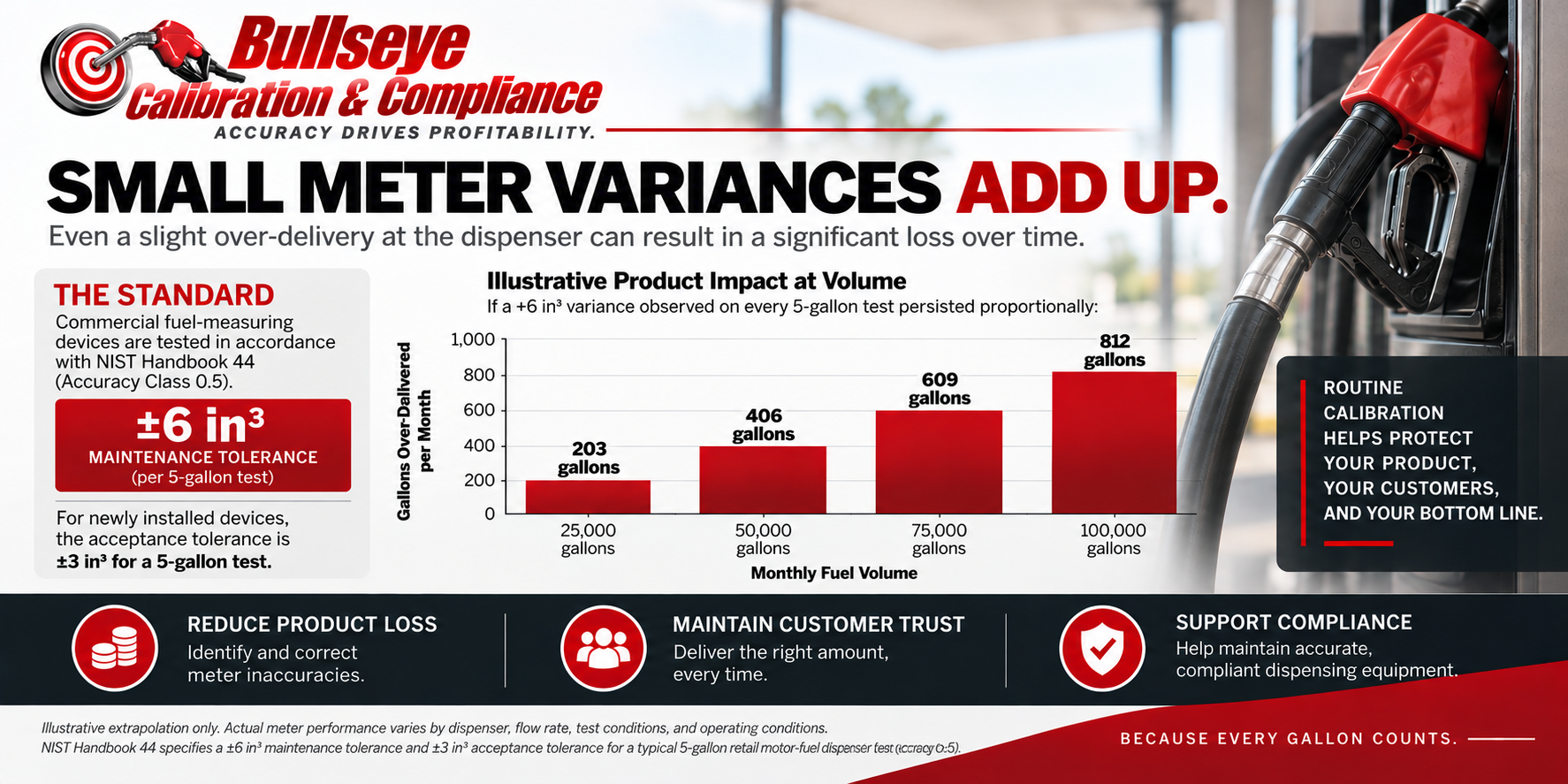
Fuel meter accuracy directly affects both your customers and your bottom line.
A dispenser that delivers more fuel than it registers can quietly create product and inventory losses over time. A meter that delivers less than it registers can result in inaccurate transactions and potential regulatory issues.
Routine calibration helps identify these discrepancies before they become larger problems. By verifying meter output and making adjustments when necessary, Bullseye helps maintain accurate dispensing, protect product, and keep your equipment operating within required tolerances.
The Process
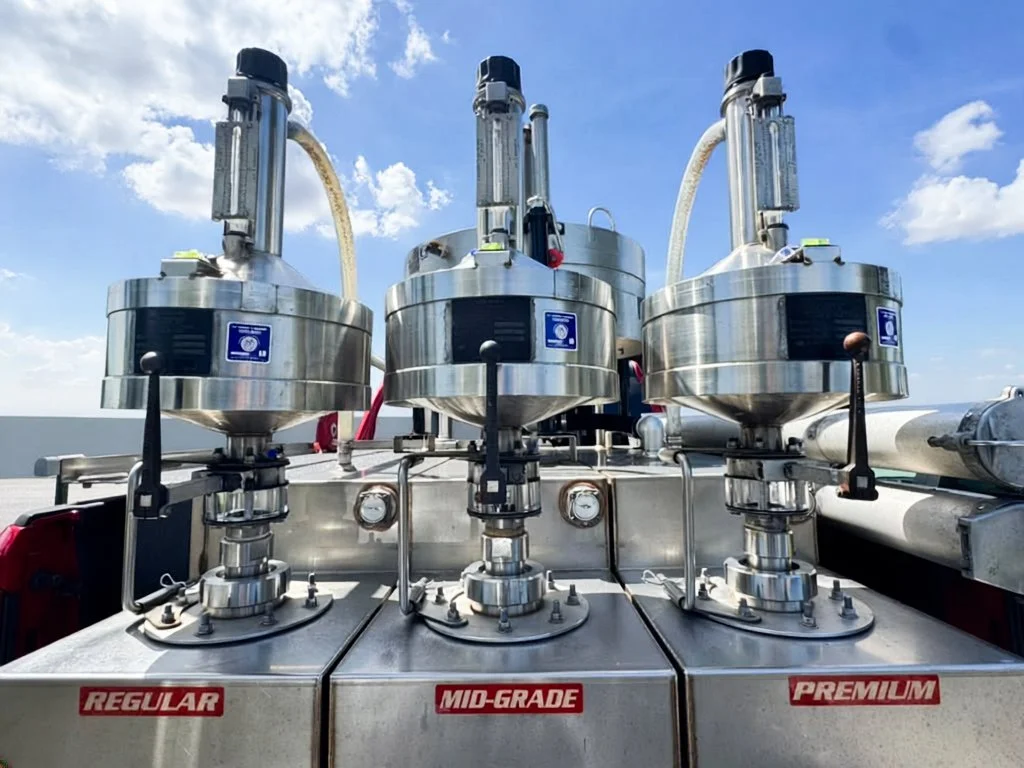
We begin by verifying dispenser output for accuracy. When adjustments are needed, our technicians recalibrate the meter using either manual controls or electronic settings, depending on the dispenser type and software.
After calibration, we:
Re-verify meter output to confirm the new settings are accurate.
Properly reseal all adjusted meters.
Test blending dispensers at the plus-grade output to verify proper operation, blend accuracy, and low-flow performance of the regular and premium meters.
Investigate output discrepancies by individually testing the regular and premium meters at very low flow rates to identify faulty meters that may require replacement.
Report applicable calibration changes and resealed meters to the appropriate regulatory authority in accordance with Florida requirements.
Our thorough calibration process helps protect against product loss, inaccurate dispensing, and avoidable compliance issues—keeping your equipment performing as it should and your business on target.